Scaena
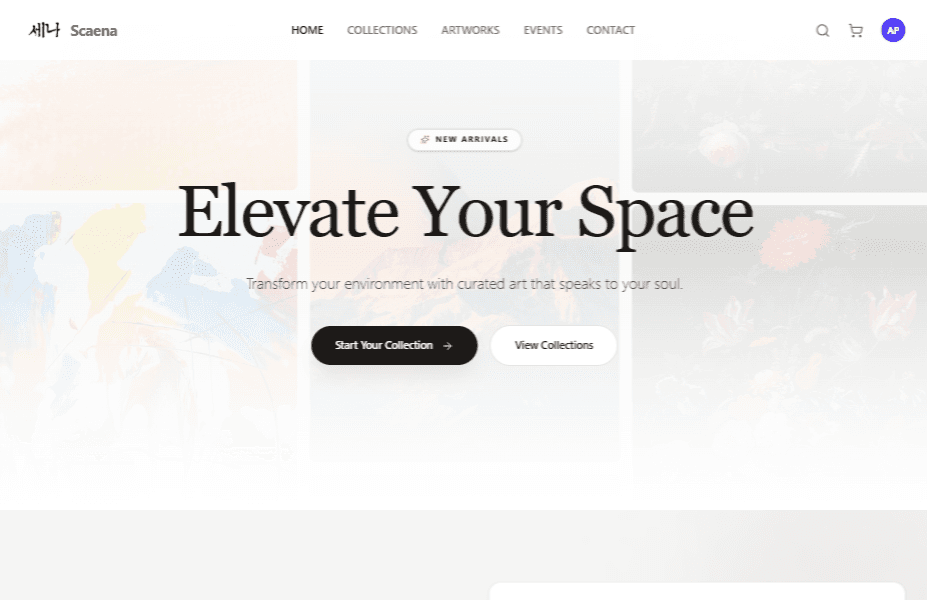
Scaena — Gallery-Commerce Platform (scaena.art)
A gallery-first commerce experience with PAS-driven messaging, curated collections, community hooks, and conversion-ready flows designed to move visitors from discovery → desire → action.
// Engineering Dossier
Arche Archive is a full-stack digital archive and publishing platform engineered to preserve cultural literature, automate book compilation, and provide high-density access to historical manuscripts, catalogs, and literary records.
Client
Arche Archive
Role & Scope
Full-Stack Engineer & Systems Architect
Timeline
2026
Primary Stack
React.js • Node.js • PostgreSQL • Docker

The Challenge
Traditional cultural preservation workflows rely on fragmented, manual toolchains for manuscript scanning, disconnected metadata storage, and tedious layout compilation—causing severe operational bottlenecks and slow publishing cycles.
The Solution
An end-to-end publishing automation architecture uniting a high-performance React catalog interface, PostgreSQL relational metadata integrity, containerized microservices, and automated n8n book compilation pipelines.
// Verified Project Outcomes
Cultural preservation organizations and independent publishers face significant operational friction when digitizing, structuring, and publishing historical literature. Traditional workflows rely on fragmented, manual toolchains: raw text scanning, disjointed metadata tracking in spreadsheets, repetitive typographic formatting, and slow editorial compilation cycles.
Without an integrated data backbone, cross-referencing citations, managing multi-volume editions, and maintaining version consistency across formats risks losing critical historical nuances while dramatically inflating publication costs and preparation time.
To solve this, I architected an end-to-end digital archiving and automated publishing platform designed for enduring data fidelity and high-throughput compilation:
By uniting relational data rigor with workflow automation, Arche Archive transformed a fractured, months-long manual publishing workflow into a streamlined digital engine.
// Curated Portfolio
A gallery-first commerce experience with PAS-driven messaging, curated collections, community hooks, and conversion-ready flows designed to move visitors from discovery → desire → action.

A native React Native reading application featuring custom typography controls, multi-palette contrast modes (sepia, dark, light), local offline chapter storage, and high-efficiency synchronization with the Arche Archive backend.